

How the lab grew
From an empty mobile home in 2020 to a small off-grid lab that manages its own energy. The photos come from the reports and pictures left by each semester's student.
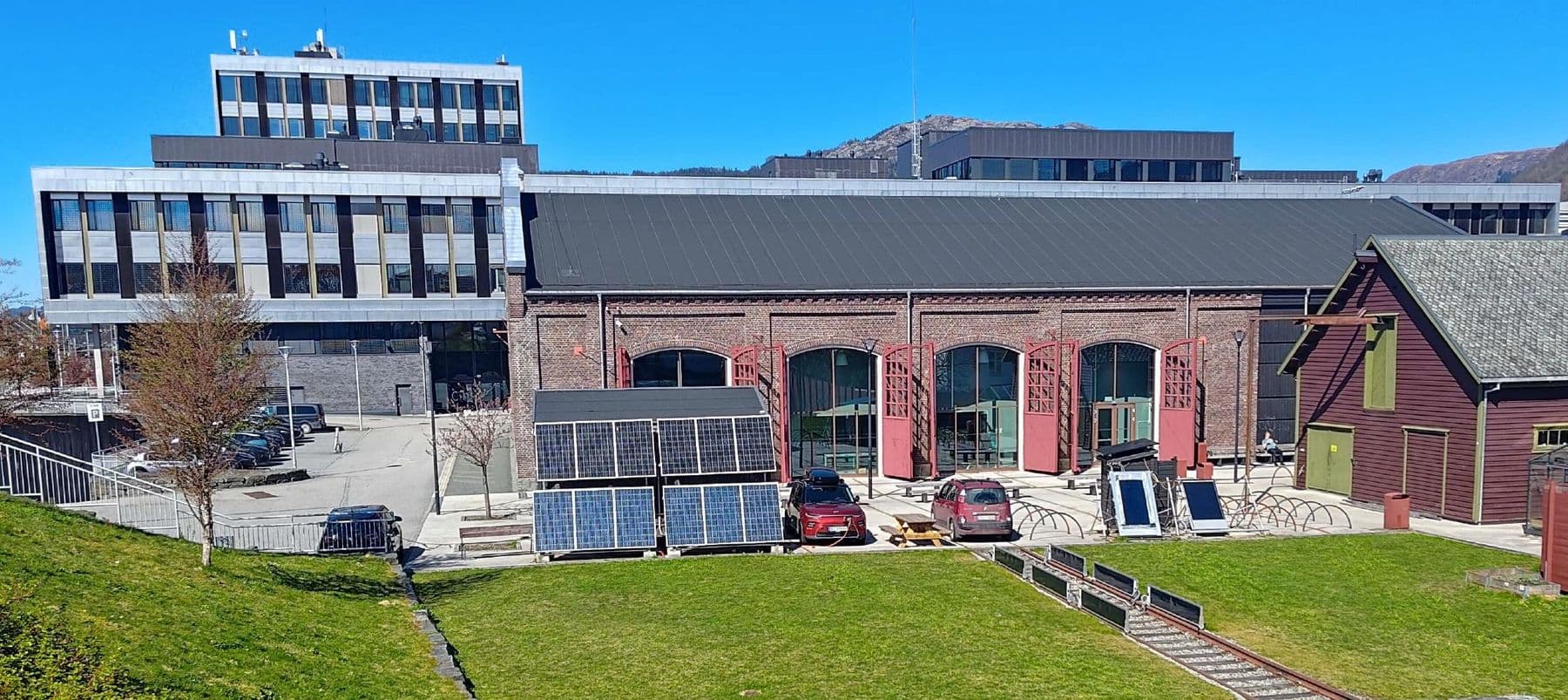
Then and now
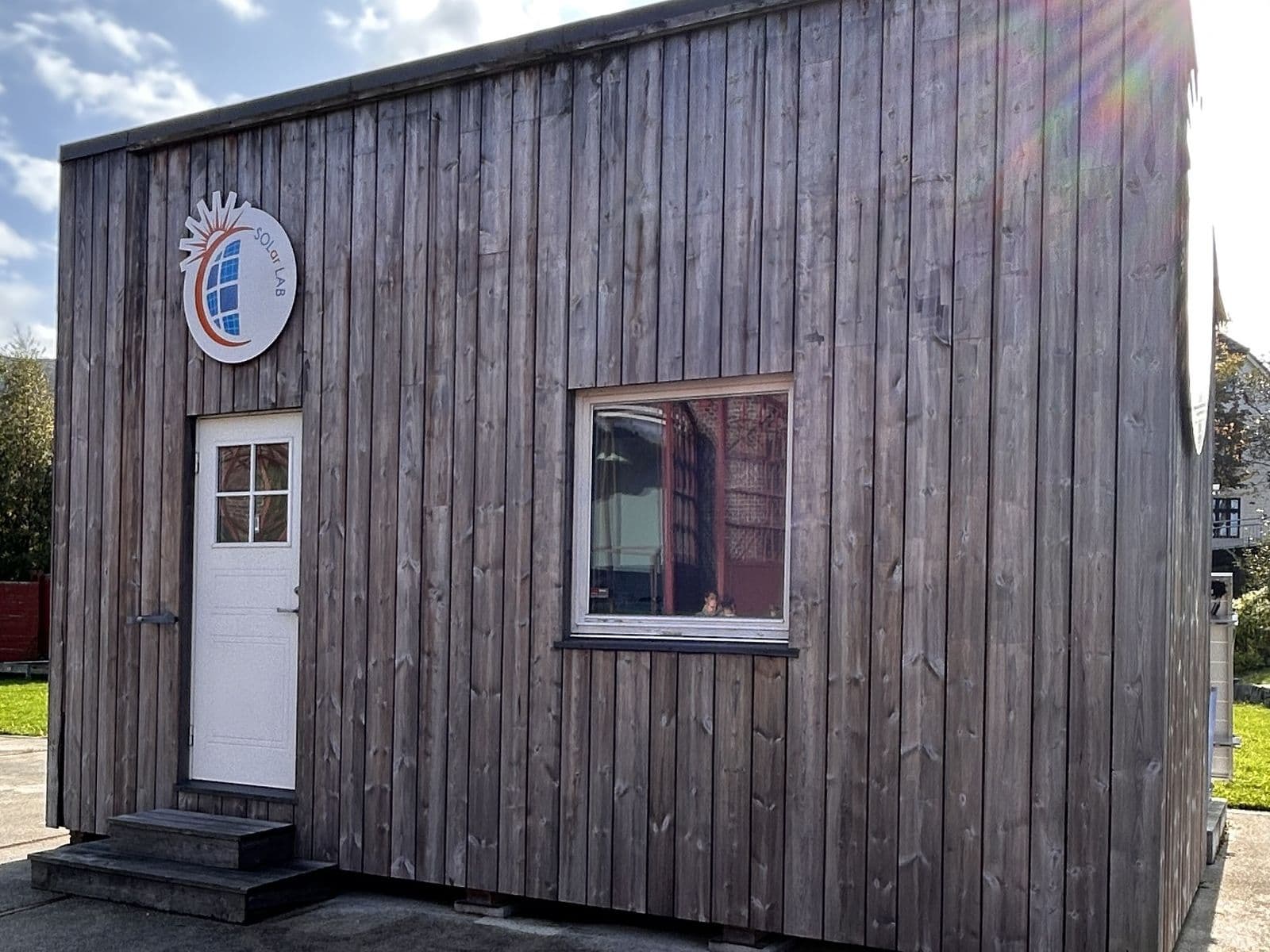
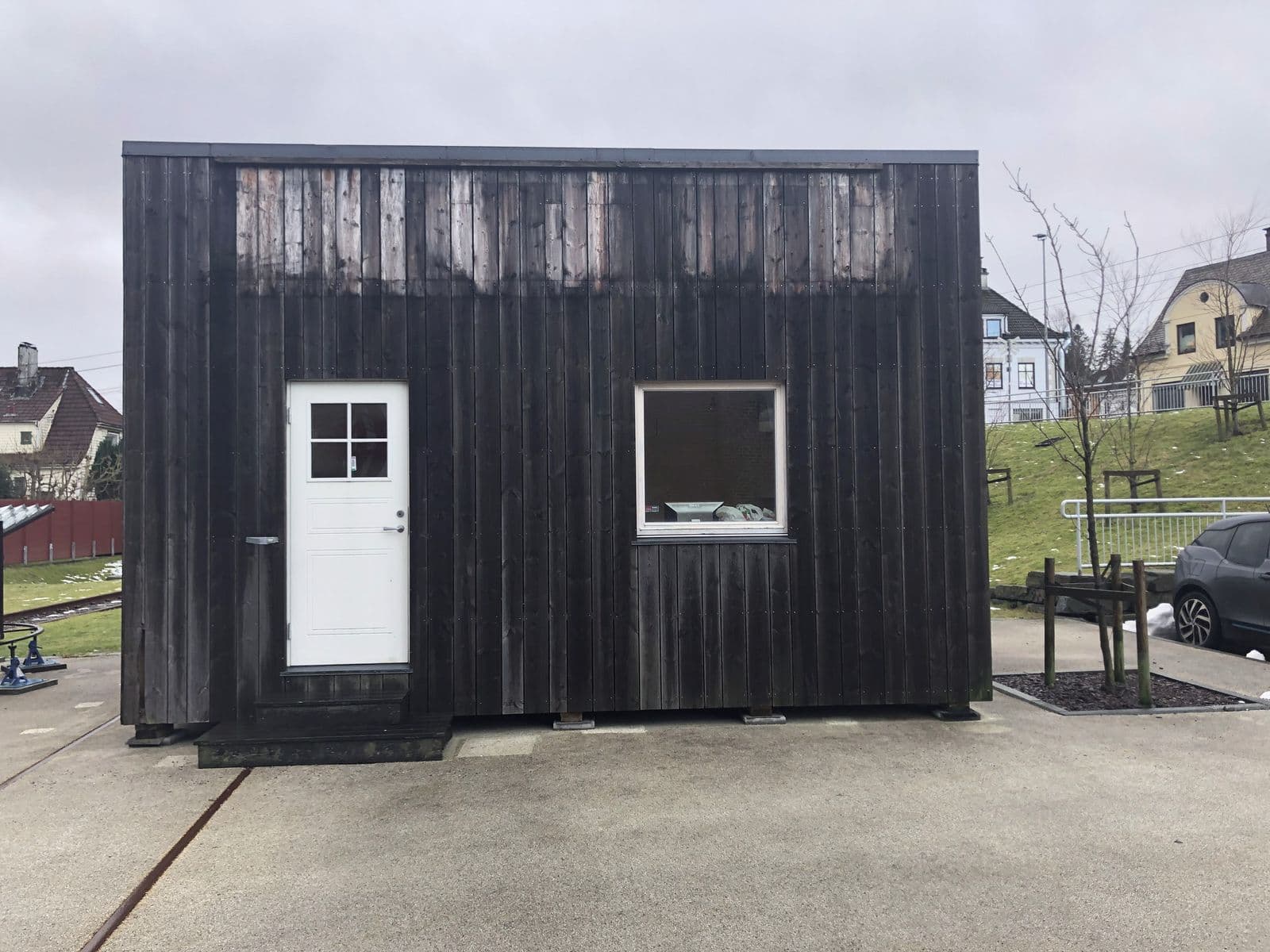
Four years apart: the same door, the same window, a logo on the wall and a lab that now runs most of the year on its own sunlight.
2019 to 2020
A mobile home becomes a lab
The SolarLab started as a mobile home on the HVL Kronstad campus, rebuilt by HVL students as a passive house: thick insulation, airtight walls and heat recovery ventilation, so that a 12 m² room needs very little energy to stay warm.
In summer 2020 the first panels stood in front of it. Inside, the technical room was still empty, with two plywood boards waiting on the wall.
WithAlexis Leignel
Autumn 2020 to 2021
Wiring the house
The three SMA inverters went up on the wall, the firefighter switches got their own little shed against the rain, and the patching board was born: a panel of plugs that lets students send each string of panels to an inverter or to the battery.
In 2021 the Tigo optimisers were connected, and for the first time the lab could see what each of its panels produced, minute by minute.
2022
A first winter, a battery puzzle and a logo
The first winters showed how little sun Bergen gets in December. Inside, the PowerOak battery and the new Sunny Island refused to talk to each other; that autumn the cause was found: the battery was not on SMA's list of compatible models.
In June 2022 the SolarLab logo went up on the wall of the house.
Autumn 2022
The campus in 3D
When moving the lab to another corner of the campus was discussed, the whole campus, its buildings and the Ulriken mountain were modelled in SketchUp to simulate the shade. The other site came out around ten times more shaded, and the lab stayed where it is.
The same model found the least shaded spot for a pyranometer: the roof of the main building.
WithPierre Lafosse
2023
Measuring the sun, and a first website
A Raspberry Pi started reading the pyranometer and saving every measurement, and the lab's sunlight could be compared with the University of Bergen's weather station.
In autumn 2023 the first solarlab.online went live, showing the last days of sunlight, and a new lithium battery was ordered.
2024
A battery that works, and a finished room
The Tesvolt TS25 lithium battery (14.4 kWh) replaced the PowerOak and finally worked with the Sunny Island. Notices and reboot instructions were written so anyone could run the system.
That autumn the backup generator relays were set up, the ventilation was programmed for day and night, and the ceiling was finished around the ventilation pipes.
2025
The loads start to switch themselves
A meter now measures what the backup generator supplies, and a relay on a radiator uses the surplus when the battery is full. Then a Python program took over: it reads the battery and switches the heater and the two car chargers on its own.
A relay box was built for the three loads, with sockets outside for the cars.
2026
Vertical panels, and a lab that restarts itself
A third array stands on the old railway rails: twelve thin flexible panels mounted back to back on vertical frames, one side facing east and the other west, to catch the low morning and evening sun this far north. In spring 2026 the panel strings were rewired, and the maximum output rose from about 2,000 W to 3,000 W.
The lab can now restart itself after a crash, and its data is open to everyone on this website.
Each step was taken by a student. Meet them on the journey page.